
BBL Is IPL: You Can’t Change Physics. Why rebranding light doesn’t change how it works
In aesthetic medicine, few topics create more confusion than light-based treatments—especially when marketing terms start sounding like entirely new technologies.
One of the most common questions we hear at Ethos Med Spa is:
“Is BBL different from IPL?”
The answer is simple—and rooted in physics:
✨ BBL is IPL.
✨ You can’t rebrand physics.
Let’s explain why.
What IPL Actually Is
IPL stands for Intense Pulsed Light.
It is:
Non-coherent light (not a laser)
Broad-spectrum light
Filtered to target specific chromophores
Designed to treat pigment, vascularity, redness, and skin tone issues
IPL works through selective photothermolysis:
Light is absorbed by a target (melanin, hemoglobin)
That energy converts to heat
The target is damaged or remodeled
The body clears it naturally
This mechanism is universal.
No marketing term alters that.
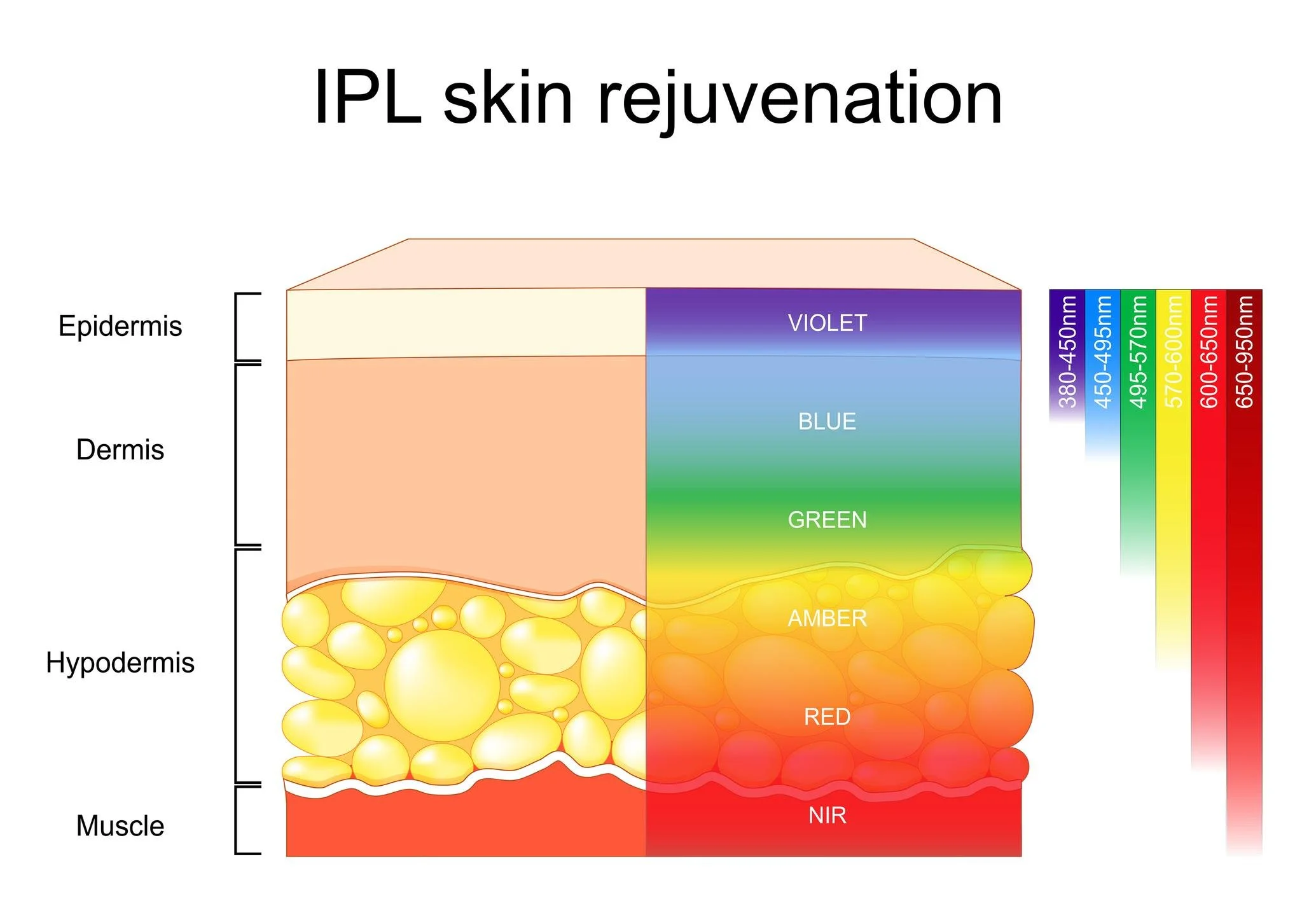
Image of depth of penetration of each wavelength
So Where Does BBL Come In?
BBL stands for BroadBand Light.
It is the brand name used by Sciton for their IPL platform.
BBL is not:
A different category of energy
A laser
A new form of light physics
It is IPL delivered by a specific device, with specific parameters, pulse structures, and cooling mechanisms.
Different IPL machines may vary in:
Pulse duration
Energy delivery
Cooling systems
Software interfaces
Handpiece design
But the underlying physics never changes.
Light is still light.
Why Marketing Muddying Matters
Problems arise when BBL is marketed as something fundamentally different from IPL.
This can lead to:
Unrealistic expectations
Price inflation justified by branding
Confusion about treatment outcomes
Patients believing they’re getting a “newer” technology
But again—physics doesn’t care about branding.
Whether the device says IPL or BBL, the treatment still depends on:
Wavelength selection
Energy control
Skin typing accuracy
Operator skill
Proper protocol design
The device is only as good as the clinical strategy behind it.
Results Come From Strategy, Not Semantics
Two clinics can use IPL-based systems and achieve drastically different results.
Why?
One understands chromophore targeting
One understands pulse stacking and spacing
One respects skin biology and recovery windows
One adjusts settings based on skin type and condition
Light-based treatments are operator-dependent, not name-dependent.
This is why calling something “BBL” doesn’t automatically make it superior—and calling something “IPL” doesn’t make it outdated.
Can Different IPL Systems Perform Differently?
Yes—but Within the Same Physics
Different IPL platforms may offer:
Faster repetition rates
More consistent pulse shapes
Enhanced cooling
Improved user interfaces
These refinements can improve comfort, efficiency, and control.
But they do not change:
How light interacts with melanin
How hemoglobin absorbs energy
How heat causes selective injury
How the body clears damaged pigment or vessels
The foundation remains IPL.
Why This Matters for Patients
Understanding this protects you from:
Overpaying for marketing language
Chasing “new” technology that isn’t new
Believing results come from brand names
Confusing device prestige with clinical expertise
Better outcomes come from:
Proper skin assessment
Correct indication selection
Thoughtful treatment planning
Conservative energy use
Repeatable, biology-respecting protocols
The Ethos Standard
At Ethos, we’re transparent because education builds trust.
We believe:
IPL is a powerful, proven technology
BBL is a branded IPL platform
Results come from physics + physiology + expertise
Marketing should never outshine science
When you understand how something works, you make better decisions—and your skin benefits.
Final Thought
Light behaves according to physics—not branding.
You can rename it.
You can redesign the interface.
You can market it beautifully.
But you can’t change how photons interact with skin.
✨ BBL is IPL.
✨ And IPL, done correctly, is still incredibly effective.
Truth doesn’t need rebranding.
